
Connecticut DOC Release Paths
Connecticut centralized its correctional institutions under the Department of Correction, so Fairfield-area sentenced people are not confined within a county jail system. A person may enter Bridgeport Correctional Center through a regional court and later move to any suitable CT DOC institution. The facility name can change several times while the same state custody term continues.
Statewide outcomes include sentence discharge, parole, special parole, transitional supervision, community correction, transfer to another authority, or death. A move within CT DOC is not release. The correct check uses the statewide record, then compares the court sentence and any parole or community-supervision source.
Search Connecticut DOC Releases
Use the official CT DOC inmate information search. The CT DOC number is the best starting field. When it is unknown, use last name, first name, and date of birth. Confirm all identifiers before relying on a location, status, or date.
- Enter the CT DOC number or the available name and birth information.
- Open the matching result and verify the person.
- Read the current location. Any active CT DOC institution means continued state custody.
- Read the release or discharge date as the current agency record.
- Check the court docket for the sentence, bond, or order behind the custody term.
- Check VINE and parole sources when a custody or supervision change is expected.
CT.gov warns that the search may not show every current processing update and that release dates may change. An absent match can also result from spelling, a restricted record, police-level release before commitment, or custody in a federal or immigration system.
Connecticut DOC Records Contact
The Public Information Office is the main contact when the online result does not answer an individual custody question. CT DOC also describes an aggregate data-request process for movement, sentencing, and demographic data, but says Freedom of Information requests follow a separate route. Choose the request channel that matches the record.
CT DOC Public Information Office
24 Wolcott Hill Road
Wethersfield, CT 06109
Phone: (860) 692-7780
Monday through Friday, 8:00 AM to 4:30 PM
Provide the full name, date of birth, CT DOC number, court docket, and the last known facility. Ask for an individual release or movement fact with precision. A court clerk remains the source for the judgment or order that created the commitment.
Connecticut Release Record Fields
The statewide result is one part of the release record. Court, parole, VINE, and DOC records can add facts that the public search does not display. Compare the same CT DOC number and date of birth across sources.
| Field | What to check |
|---|---|
| CT DOC number | State identity used across facilities. |
| Current location | Active institution or absence of an active site. |
| Commitment date | Start of the state custody period. |
| Release date | Projected or completed date shown by DOC. |
| Movement history | Transfers between institutions, which are not releases. |
| Supervision status | Parole, special parole, transitional supervision, or other path. |
Release from incarceration does not always end the full sentence structure. Parole and special parole can continue under supervision, while probation remains a court-based route.
Connecticut Release Date Rules
CT DOC begins with the sentence imposed by the court. Presentence confinement credit under section 18-98d can include qualifying time in a police station or courthouse lockup. Section 18-98e permits eligible sentenced people to earn up to five days per month of risk reduction credit at the commissioner's discretion, subject to exclusions, conduct, programming, and mandatory-minimum limits.
Parole eligibility is a separate decision track. BOPP materials describe general 50 percent and certain 85 percent service rules based on the offense and statutory timing. A projected release date can change with corrected jail credit, earned or lost credit, court action, revocation, rescission, or processing lag. Section 18-92 adds a clear calendar rule: a DOC term that expires on a weekend or legal holiday is discharged on the preceding business day.
- Projected date
- The current calculation, which may change.
- Discharge
- Release at the end of the applicable custodial term.
- Parole
- Conditional community release under state supervision.
- Transfer
- Continued custody at another site or under another authority.
Connecticut DOC Source View
The official Connecticut prison-system service page describes the state search fields and cautions about status and release-date changes. The captured view below helps readers identify the official statewide source.
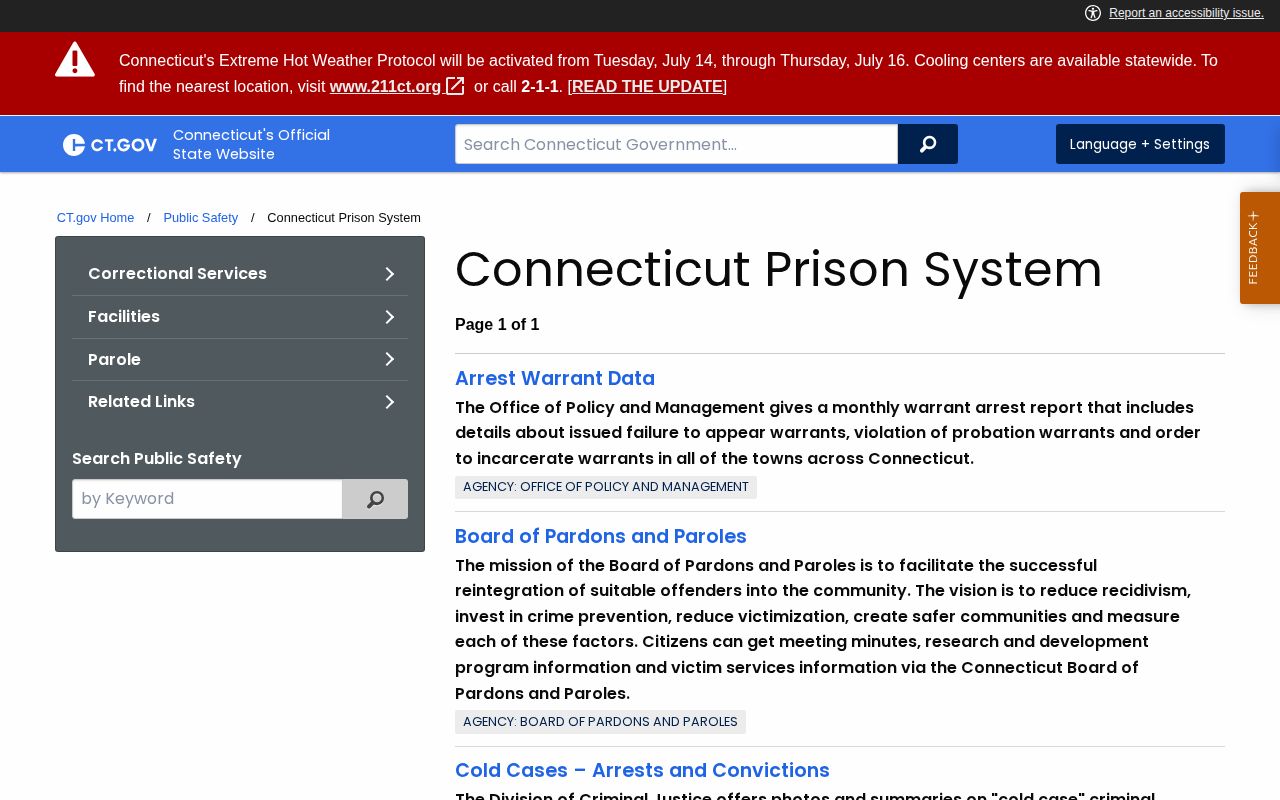
This statewide page supports the search across all facilities rather than a Bridgeport-only check.
Connecticut Release and ICE
A person can leave CT DOC while entering federal or immigration custody. Such a transfer ends custody at one agency but does not establish community release. Search the ICE Online Detainee Locator System when immigration transfer is possible. Search BOP and the federal docket when the next authority is federal criminal custody.
ODLS uses an A-number and country of birth or exact biographical data. Keep its result separate from the Connecticut record. The state docket explains the Connecticut case, CT DOC documents the state custody movement, and ICE documents immigration detention within its system. A detainer is a notice or request involving another authority and does not alone prove where the person went.
Note: “Released from CT DOC” and “released to the community” are not always the same event.
After Connecticut DOC Release
CT DOC Parole and Community Services supervises people released under the jurisdiction of the Commissioner and Board of Pardons and Paroles. The division lists a Bridgeport district among its offices. BOPP dockets and minutes can document parole grants, denials, rescissions, revocations, and early termination reviews. Probation is handled through the Judicial Branch instead.
Reentry records and services are separate from custody confirmation. CT DOC identifies full-time reentry counselors and pre-release handoff work. Connecticut reentry sources direct a person seeking identification to the discharge facility within 30 days, then to central Reentry Services after that point. State law also authorizes rules for clothing, transportation, grants, or loans at discharge. The Fairfield County release search places that transition beside the police and court routes. These facts explain the transition after release without changing the official custody status.
A release inquiry should preserve the last known institution and the date it was checked. That detail helps Public Information distinguish a recent transfer from a completed discharge. It also helps the court clerk connect the state movement to the correct sentence. When parole is involved, compare the DOC date with the Board decision and the assigned supervision office. None of those later records turns an earlier movement between state institutions into a community release.
Connecticut Sentence Source Records
The court judgment remains the source for the sentence imposed. For definite sentences longer than two years, section 54-91h requires the sentencing court to state the maximum imprisonment period and address possible risk reduction credit and parole eligibility. That notice can explain why a DOC date differs from a simple count of calendar days. Obtain the docket and judgment when the public inmate result does not show enough calculation detail.
CT DOC then applies the confinement credits and later custody events within its authority. Section 18-98d addresses presentence confinement credit. Section 18-98e governs discretionary risk reduction credit for eligible people and bars credit from reducing a mandatory minimum. BOPP decides parole matters under separate rules. These are connected records, but each agency owns a different part of the answer.
Connecticut Short Sentence Releases
Fairfield-area defendants serving shorter terms can follow paths that differ from a long prison sentence. Section 18-100c addresses certain people with definite sentences of two years or less and permits release to an approved community correction program after the statutory threshold, less listed credits. That is not the same as a court bond release and not the same as a parole-board grant.
Bridgeport Correctional Center holds both pretrial and sentenced people, so the case type must be identified before interpreting a date. A pretrial person may have no fixed sentence-release date. A short sentenced person may be eligible for a statutory community program. A longer sentenced person may face a different parole eligibility schedule. The DOC number and judgment keep those groups distinct.
Connecticut Parole Record Checks
BOPP hearing dockets and meeting minutes can show a grant, denial, continuance, rescission, revocation, or early termination review. A grant authorizes release subject to planning and conditions; it does not mean physical release occurred on the hearing date. Compare the Board action with CT DOC status and the assigned Parole and Community Services office.
The public does not receive a full supervision case file through the inmate search. For a Fairfield release, the Bridgeport parole district may be relevant depending on residence and the approved plan. Direct verification should ask only for information the agency can make public. A missing name on a current hearing list does not prove that no parole status exists because hearing pages are date based.